
- Home
- Is eye surgery in Turkey safe?
Is Eye Surgery in Turkey Safe? What to Check Before You Book
Many people travel to Istanbul for laser eye surgery, lens replacement and cataract surgery every year. Whether it goes well rarely depends on the country. It's the surgeon, the tests before surgery and the plan for when something needs attention. This page tells you what to check, whoever you book with.
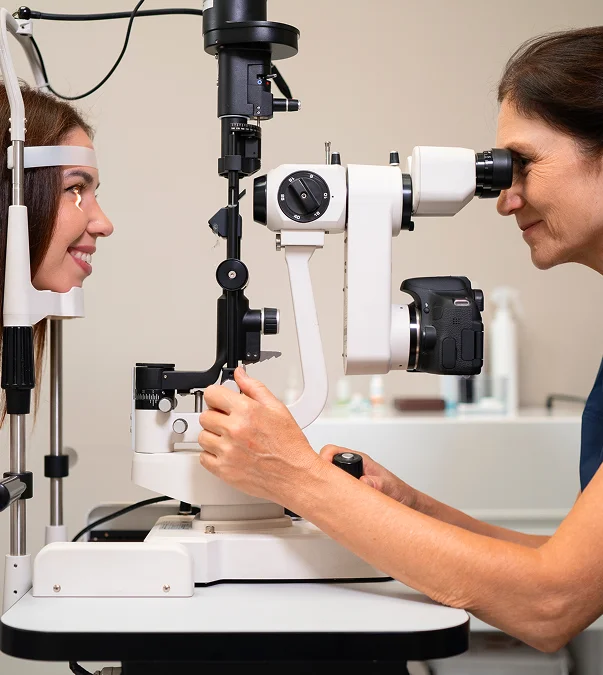
Is it safe to have laser eye surgery in Turkey? It can be as safe as at home when an experienced ophthalmologist operates in a fully equipped operating theatre, after full pre-operative tests, with a clear plan for aftercare once you return home. The risks rise when patients choose on price, can't name their surgeon, are rushed into a decision or have no plan for problems after they fly home.
Is it safe to have laser eye surgery in Turkey? The honest answer
The Royal College of Ophthalmologists (RCOphth), the UK professional body for eye surgeons, reports that over 95% of laser vision correction patients are satisfied with the outcome. It also states the risks plainly.
- 95%+of laser vision correction patients satisfied with the outcome (RCOphth)
- < 1 in 5,000need a corneal transplant to restore vision after laser surgery
- up to 1 in 10need some form of additional surgery to get the best result
What the numbers depend on
None of those numbers depends on the passport of the surgeon. They depend on whether you were a suitable candidate, how well your eyes were measured, the skill of the person operating and the care you get afterwards. Those are things you can check.
Standards of care vary from one clinic to the next, in every country. That isn't a reason to rule out Turkey; it's a reason to check carefully, which is what the rest of this page is for.

So, is Turkey good for eye surgery?
Turkey has university-trained eye surgeons, a national specialist training system and modern lasers and lenses. The quality still varies from one surgeon and one facility to the next, as it does in the UK. Judge the individual surgeon, not the country.
Compare our three surgeonsHow to check an eye surgeon in Turkey
Six checks that work for any surgeon, including ours.
1. Get a name, in writing, before you pay
You should know who will examine you, who will operate and who will check your recovery. The RCOphth advises meeting the surgeon who will perform your procedure, and says only the operating surgeon should advise you on the choice of procedure and take your consent. "Our expert team" is not a name.
2. Check they are a fully trained eye specialist
In Turkey, eye surgeons complete several years of specialist training in ophthalmology after medical school, through a national residency programme that doctors enter by a competitive exam. Ask when your surgeon qualified as an ophthalmology specialist and where they trained.
3. Understand the titles
Prof. Dr. and Doç. Dr. are academic ranks: "Doç." means associate professor, a title awarded after an assessment of the doctor's published research. An academic title tells you about university career and research; it isn't the only sign of a good surgeon, and many excellent surgeons work outside universities.
4. Look up their publications
Search the surgeon's name on PubMed (pubmed.ncbi.nlm.nih.gov), the free US National Library of Medicine database. Peer-reviewed papers show a surgeon's field of interest and that their work has been scrutinised by other specialists. A surgeon who doesn't publish can still be very skilled, so treat this as one piece of evidence, not the whole picture.
5. Match the specialty to your eyes
Keratoconus is a cornea problem; a detached retina needs a retina surgeon; premium lens surgery needs someone who does a lot of lens surgery. Ask what proportion of their work is the operation you need.
6. Ask about their own results
The RCOphth suggests asking your surgeon which complications they have seen most often with your procedure, how often, and what they did to correct them. A confident surgeon will answer directly.
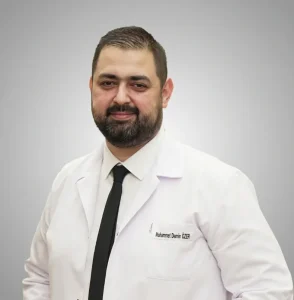
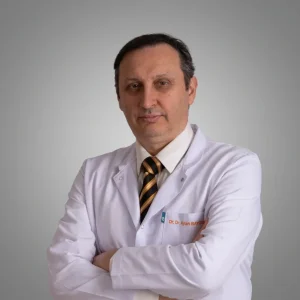
Our surgeons, so you can check them

The tests you should have before surgery
A safe decision starts with measurements. Before laser or lens surgery, a thorough assessment usually includes:
| Test | What it checks | Why it matters |
|---|---|---|
| Refraction | Your exact glasses prescription | Laser surgery suits adults over 18 whose prescription is stable (the RCOphth defines this as no change greater than 0.5 dioptres in two years) |
| Corneal topography | A map of the curvature of your cornea | Shows irregular corneas, such as keratoconus, which change which treatments are safe for you |
| Corneal thickness | How much tissue there is to work with | Thin corneas may need a surface laser method, an ICL lens or no laser at all |
| Wavefront scan | An optical map of your eye | Used to guide modern laser treatments |
| Biometry | The length and focusing power of your eye | Calculates the lens power for cataract surgery and lens replacement |
| Eye pressure | Pressure inside the eye | Screens for glaucoma |
| Retina and OCT scan | The back of the eye | Finds retinal problems that change the plan or the risk |
| Eye surface and tear film | Dryness and eyelid health | Dry or inflamed eyes may need treatment before surgery |
Contact lenses change your cornea
The US Food and Drug Administration advises stopping soft lenses for 2 weeks, toric soft or rigid gas-permeable lenses for at least 3 weeks, and hard lenses for at least 4 weeks before the baseline evaluation, because lenses can change the shape of the cornea for weeks. Measurements taken too soon can lead to the wrong treatment plan.
A good assessment can end in "no"
If your scans show you're not a safe candidate, a responsible surgeon will tell you, even after you've travelled, and suggest a better option or none at all. Be wary of anyone who agrees to operate before seeing any measurements.
Where your surgery takes place
A proper operating theatre, and the address before you travel
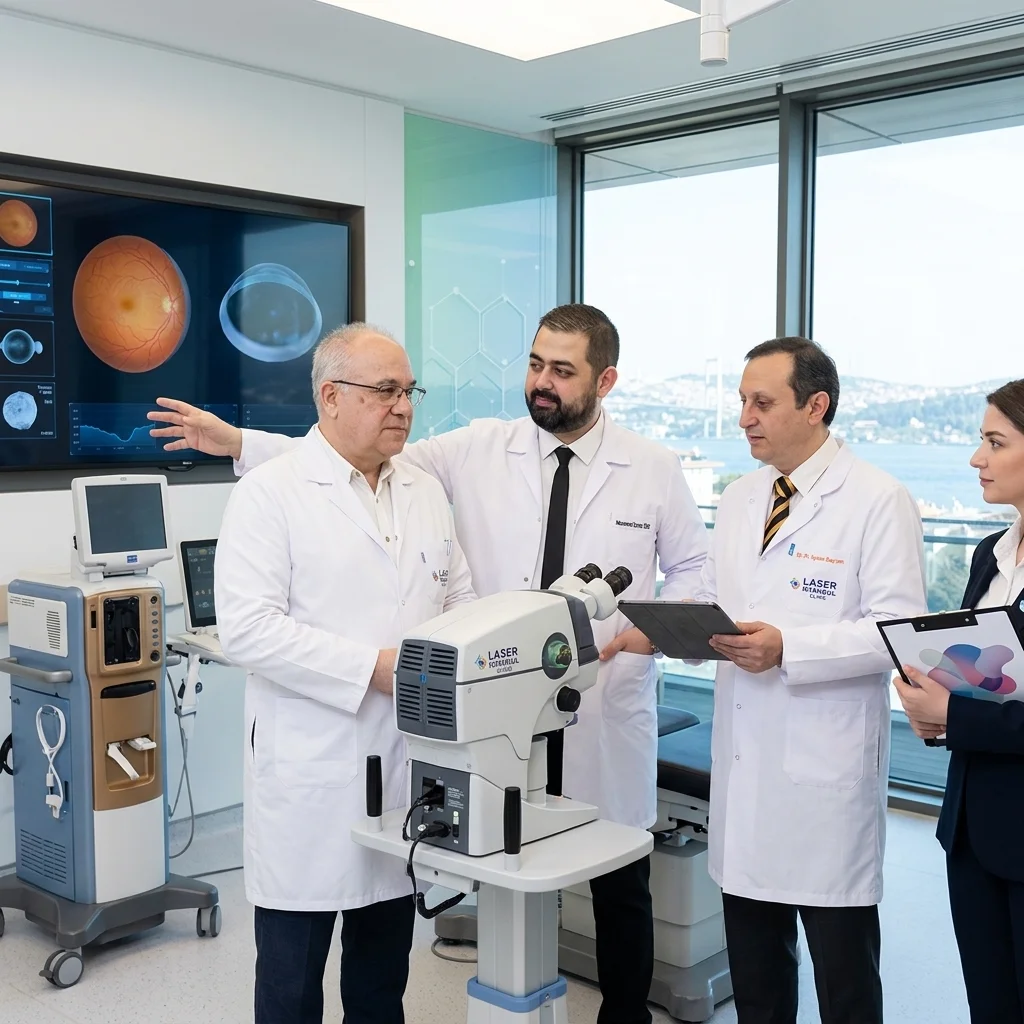
Eye surgery should happen in a proper operating theatre, with sterile conditions, modern lasers and microscopes, and a team trained to look after you on the day. Before you travel, ask for the address of the place where you will actually be operated on, and make sure it's a hospital or surgical centre with a proper operating theatre, not a shop-front clinic or a hotel suite.
On the day, you should expect: a final check of your eyes and your measurements by your surgeon, a calm explanation of each step, numbing anaesthetic for your eye, and time to rest before you leave.
- At Laser Istanbul Clinic, your surgery takes place in a fully equipped, Ministry of Health–licensed operating theatre in Istanbul
- You receive the address before you travel
A safe path from first message to surgery
Whoever you choose, a safe process looks like this:
Your scans and prescription are reviewed by a surgeon first
Not by a salesperson, before you're given a price.
You receive a written plan and quote
Naming your surgeon, the procedure, the lens or laser type and everything included.
You talk to your surgeon before you book
By video if you like, and ask every question on this page. The RCOphth advises taking at least a week after your consultation to think before surgery; when you're travelling, do that thinking at home, before you fly.
You have a full examination in person
Before any final decision. If the results change the plan, you're told why.
You give consent with your surgeon
Through an interpreter if you need one, after the risks for your eyes have been explained.
You're checked again before you fly
And you go home with your full records.
Your recovery is followed up remotely
With a clear route to in-person care if you need it.
Questions to ask before you book
Take this list to your consultation. Write the answers down.
- What is the name of the surgeon who will operate on me, and can I speak to them before I book?
- When did they become an eye specialist, and how often do they perform this exact procedure?
- Which tests will be done before surgery, and who will review the results?
- Why is this procedure the right one for my eyes? What are the alternatives?
- Which laser or which lens model will be used, and why?
- What are the most likely side effects and complications for me, and how would they be treated?
- What exactly is included in the price, and what isn't?
- Is my deposit refundable if the examination shows I'm not suitable, or if I change my mind?
- How many check-ups will I have in Istanbul, and when can I safely fly?
- Who looks after me when I'm home, and how do I reach them out of hours?
- What happens, and who pays, if I need further treatment or a re-treatment?
- Where exactly will the surgery take place?
The risks of choosing on price alone
Price differences between clinics in Istanbul are real, and a lower price isn't automatically a worse one. But when one offer is far below the others, something has usually been taken out. Common places to look:
The surgeon
Is the surgeon named before you pay? Will the same surgeon do your assessment and your operation?
The assessment
A short assessment on the morning of surgery leaves little room to find a reason not to operate.
The lens
Lenses differ by manufacturer and model, and so do their prices. Two quotes for "trifocal lens surgery" may not use the same lens; ask for the manufacturer and model.
The aftercare
Check how many follow-up visits are included, whether remote follow-up is included once you're home, and whether re-treatment is covered.
The extras
Hotels, transfers, medication and extra nights add up. Compare the total, not the headline.
Make sure your decision is based on the quality of the medical care you want, not on how appealing the destination is for a holiday.
NHS treatment-abroad checklist · The RCOphth adds: never feel rushed into consent by limited-time offers or discounts such as two-for-one deals.
Red flags: when to walk away
The NHS lists warning signs to think carefully about before booking treatment abroad: a hard sell, a lack of information, pressure to make a quick decision, no discussion of possible complications, and no mention of aftercare. In eye surgery, add these:
No surgeon's name until you arrive
Or a different surgeon on the day.
A price before any measurements
A price, or a "you're suitable", given before anyone has seen your measurements.
Consent taken by a salesperson
Consent taken by a coordinator or salesperson instead of the operating surgeon.
Promises of perfect vision
Or "no risk".
A non-refundable deposit
With no way out if the examination shows you're unsuitable.
Surgery on the day you land
With no time for proper tests.
No written records
No lens details or contact person for after you fly home.
Reviews that are all five stars
All recent and all vague.

Interpreter service
Understanding every word of your consent
Informed consent only works if you understand it. Every Laser Istanbul Clinic patient has a personal interpreter at the examination, the consent discussion, surgery and check-ups, and all your documents are provided in English. Doç. Dr. Özer and Op. Dr. Bayram speak English; the interpreter is there anyway, so that nothing is lost in a conversation that matters this much. If something isn't clear, ask again. A good surgeon would rather explain twice than have you agree to something you don't understand.
Travelling safely around your surgery
Leave enough time
Plan 3–5 days in Istanbul for laser eye surgery and 5–7 days for lens replacement or cataract surgery, so your surgeon can check you before you fly.
Fly when your surgeon says so
Most patients can fly 1–3 days after laser surgery and about 3–7 days after lens or cataract surgery. After some retina operations that use a gas bubble, flying isn't safe for several weeks. Check when you can fly home before you book your flights.
Keep the holiday gentle
Most surgeons recommend no swimming for a week, and no contact sports for a month after LASIK. Red blotches on the white of the eye are common after surgery and can take up to six weeks to fade.
Get the right insurance
Standard travel insurance doesn't normally cover you if you travel for elective surgery. Look for a specialist policy that covers treatment abroad and complications. UK patients should note that the GHIC and EHIC aren't valid in Turkey.
Aftercare
Aftercare, and what happens if something goes wrong
Most problems after eye surgery can be corrected with medication or further surgery, according to the RCOphth, and some cause no symptoms at first. That's why the aftercare plan matters as much as the operation.
Before you fly home
Your surgeon examines you again. You leave with your full surgical report, the exact lens model and power (for lens surgery), your drop schedule and direct contact details for your coordinator.
When you're home
Your coordinator stays in touch and your surgeon reviews your recovery by video at agreed intervals. If you need to be seen in person, we help you arrange it with a local optometrist or ophthalmologist and send them your full records.
If something goes wrong
{{complication policy: what the surgeons cover if there is a complication or a re-treatment is needed, for how long, whether a return trip to Istanbul is covered, and who pays for an in-person review at home}}
For comparison, the RCOphth says UK laser clinics normally include follow-up visits and treatment for problems resulting from surgery in the fee, and normally include further laser fine-tuning for up to two years. Whoever you choose, ask for the equivalent in writing.
Know the urgent warning signs
Contact your surgeon without delay if you have increasing pain, light sensitivity, redness or blurred vision.
After cataract or lens surgery, a dark shadow across part of your vision, flashing lights or a sudden shower of new floaters can mean a retinal detachment: go to an eye casualty or emergency department straight away, then tell your surgeon.
What your home health service will do
In the UK, the NHS treats emergencies, but the RCOphth warns that it is unlikely to help with aftercare for surgery abroad unless you have a serious complication needing emergency or life-saving treatment. Further care at home can be expensive, which is why a clear follow-up plan with your own surgeon matters. It's a good idea to tell your GP or optometrist about your plans before you go and share your written plan with them.
How we approach safety at Laser Istanbul Clinic
We built this service around the checks on this page:
Three named surgeons only
Whose training, academic titles and publications you can check yourself.
Your surgeon reviews your case before you book
And the same surgeon examines you, operates and checks your recovery.
A written price
From your surgeon before you pay a deposit, listing what's included; hotel and airport transfers are not included and are charged separately if you want us to arrange them.
A personal interpreter
At every appointment.
Permission to say no
If your eyes aren't suitable, your surgeon will tell you.
Frequently asked questions
Home: eye surgery in IstanbulYes, it can be, when an experienced ophthalmologist operates after a full pre-operative assessment, in a fully equipped operating theatre, with a clear aftercare plan. Laser surgery has known risks wherever it is done: the RCOphth reports that up to 1 in 10 patients need additional surgery for the best result and that serious permanent sight loss is rare. Check the surgeon, the tests and the aftercare before you book.
Turkey has university-trained ophthalmologists, a national specialist training system and modern lasers and lenses, and Istanbul is a popular destination for eye surgery. Quality varies between surgeons and facilities, as it does everywhere, so judge the individual surgeon rather than the country.
Ask for the surgeon's name, where and when they trained as an ophthalmology specialist, and their academic title if they have one. Search their name on PubMed for published research. Ask how often they perform your procedure and which complications they see most often. A trustworthy clinic gives you all of this before you pay.
Not necessarily unsafe, but check what's missing. A very low price can mean an unnamed surgeon, a rushed assessment, a cheaper lens or limited aftercare. Compare the surgeon, the tests, the exact laser or lens and what happens if you need re-treatment, not only the price.
Contact your surgeon's team straight away; for sudden pain, a shadow in your vision or flashing lights, go to an eye casualty or emergency department first. Your surgeon should review you remotely and help arrange in-person care if needed. {{complication policy, one sentence}}
The NHS will treat a genuine emergency, but the Royal College of Ophthalmologists says it is unlikely to help with aftercare for surgery abroad unless the complication needs emergency or life-saving treatment. Plan your aftercare, and get specialist insurance, before you travel.
In a fully equipped, Ministry of Health–licensed operating theatre in Istanbul. Your coordinator sends you the exact address before you travel, and your surgeon checks your eyes again on the day, before the operation.
The Royal College of Ophthalmologists advises taking at least a week after your consultation with the operating surgeon to think things through. If you're travelling, have that consultation by video before you book, so the thinking time happens at home.
Ask a surgeon, before you decide anything
Send us your prescription or eye report and your questions, including every question on this page. Prof. Dr. Satıcı, Doç. Dr. Özer or Op. Dr. Bayram will tell you whether surgery may suit your eyes, which option and why, with no obligation and no deadline. You'll get a reply within {{response time}}.
3 eye surgeons
Your case is reviewed by a named surgeon, not a salesperson. Reply within {{response time}}.
 Prof. Dr. Ahmet Satıcı
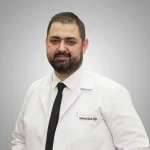 Doç. Dr. Muhammet Derda Özer
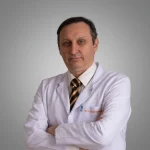 Op. Dr. Aysan Bayram