
- Home: eye surgery in Istanbul
- All eye treatments
- Eye colour change surgery: risks
Eye Color Change Surgery: The Risks, and Why We Don't Offer It
Eye color change surgery promises brown eyes that turn blue, green or grey for good. It is sold in several countries, including Turkey, as an iris implant, a corneal "tattoo" called keratopigmentation, or a laser that strips pigment from the iris. This page explains how each method works, what the published studies report, and why our three eye surgeons in Istanbul do not perform any of them.
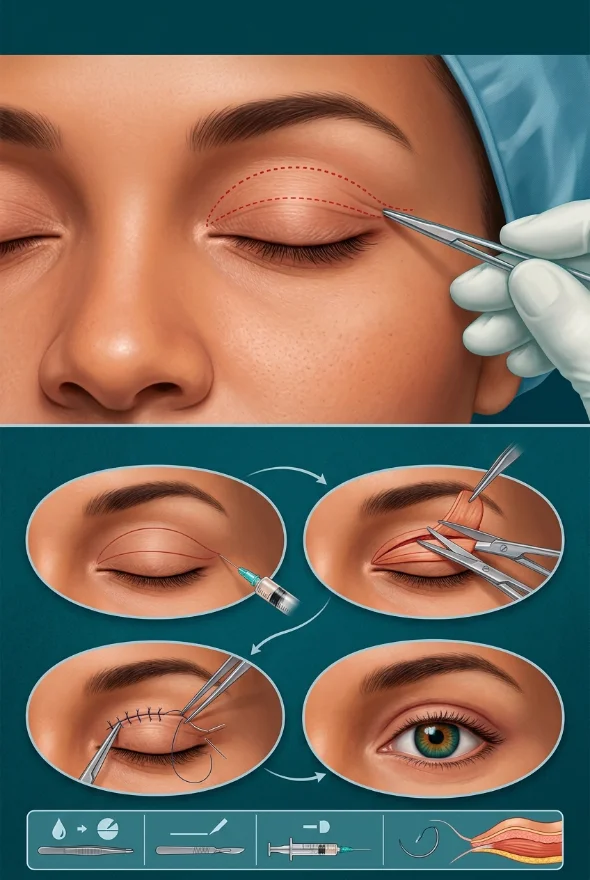
Eye color change surgery means a cosmetic iris implant, keratopigmentation (pigment placed inside the cornea) or laser iris depigmentation, done on healthy eyes. The American Academy of Ophthalmology warned against implants and keratopigmentation in January 2024, citing glaucoma, cataract, corneal damage and vision loss. Laser Istanbul Clinic does not offer it. Prof. Dr. Ahmet Satıcı, Doç. Dr. Muhammet Derda Özer and Op. Dr. Aysan Bayram can examine eyes that have already had it.
What is eye color change surgery?
Eye color change surgery is any operation or laser treatment that permanently changes how the colour of a healthy eye looks. There are three methods in use in 2026, and they work in very different ways:
| Method | What is done | Where in the eye | Main published risks |
|---|---|---|---|
| Cosmetic iris implant | A coloured silicone disc is inserted through a small cut in the eye and placed over your own iris | Inside the eye, in the front chamber between the cornea and the iris | Glaucoma, damage to the inner layer of the cornea, uveitis (inflammation), cataract, vision loss; most need the implant removed |
| Keratopigmentation (corneal tattooing) | Tunnels are cut inside the cornea, usually with a femtosecond laser, and filled with coloured mineral pigment | In the cornea, the clear window at the front of the eye, over the iris | Light sensitivity, infection, corneal thinning and bulging (ectasia), colour fading or changing, MRI and visual-field effects |
| Laser iris depigmentation | A laser removes pigment from the front layer of the iris over several sessions | On the surface of your own iris | Pressure spikes inside the eye, inflammation, patchy colour, light sensitivity; limited long-term data |
None of the three improves sight. Each one puts a healthy, seeing eye through a procedure that can harm it, purely for its look. That is the central issue with every form of eye colour change surgery.
How eye colour works, and why it's hard to change safely
Your eye colour comes from melanin, the same pigment that colours skin and hair. According to MedlinePlus, the US National Library of Medicine's genetics service, eye colour "is directly related to the amount of melanin in the front layers of the iris." Brown eyes have a lot of melanin; blue eyes have much less. Brown is the most common eye colour in the world.
The iris is not a surface you can paint. It sits inside the eye, bathed in fluid, right next to the eye's drainage channels and just behind the cornea, whose delicate inner cell layer keeps it clear. That is why each method of changing its colour carries its own particular danger: an implant rubs against these structures, pigment released by a laser can clog the drainage channels, and pigment placed in the cornea changes a tissue that must stay clear and strong for you to see.
What are the risks of cosmetic iris implants?
Cosmetic iris implants have the worst safety record of the three methods. The American Academy of Ophthalmology (AAO) lists the risks as reduced vision or blindness, light sensitivity, raised eye pressure leading to glaucoma, cataract, corneal damage that may need a transplant, and iris inflammation causing pain and blurred vision. Iris implants are approved in the US only for people who are missing part or all of their iris because of injury or a birth defect, not for changing eye colour. A 2022 review notes that cosmetic iris implants are neither FDA-approved nor CE-marked.
What the published case series show:
| Study | Eyes | What happened |
|---|---|---|
| French multicentre series, 2020 | 65 eyes analysed | 92.3% had at least one complication; 78.5% developed corneal decompensation (the cornea losing its clarity); glaucoma was diagnosed in 52.3%; 81.5% needed the implant removed |
| University eye institute, Los Angeles, 2021 | 24 eyes | The implant was removed from 79.2%; 29.2% needed a corneal transplant and 29.2% cataract surgery; 29.2% still had glaucoma at the last check, years after removal |
| UK specialist eye hospital, London, 2025 | 30 eyes (2008–2023) | 60% had uveitis; 33.3% needed glaucoma surgery; 20% needed a corneal transplant (DMEK); 13.3% needed cataract surgery |
The UK authors concluded that cosmetic iris implantation "should be banned worldwide." The Los Angeles team found that harm "persisted for years after explantation", and a 2022 case report described problems that first appeared 15 years after an uneventful implant. Removing the implant does not always undo the damage already done to the cornea and the eye's drainage system.
If something goes wrong, the treatment is serious eye surgery: implant removal, glaucoma surgery, cataract surgery and sometimes a corneal transplant, often in young people who had healthy eyes beforehand.
What is keratopigmentation, and is it safe?
Keratopigmentation (KTP) is a form of corneal tattooing: a surgeon creates a ring-shaped tunnel inside the cornea, usually with a femtosecond laser, and fills it with micronised mineral pigment so the eye looks a different colour from the outside. Your own iris is untouched underneath. It was first developed to disguise scarred or disfigured eyes, and that medical use (therapeutic keratopigmentation) is well established. Using it on healthy eyes for cosmetic reasons is newer, and opinion is divided.
What the AAO says. In its January 2024 warning, the AAO listed the risks of keratopigmentation as corneal cloudiness, warping and fluid leakage; light sensitivity; reactions to the dye causing inflammation or uveitis; bacterial or fungal infection with scarring; and uneven dye and colour fading.
What the developers' own studies show. The surgical group that refined the modern technique reports high satisfaction, but its own papers also record the downsides:
- In 234 eyes treated for medical and cosmetic reasons (2018), 12.8% had complications. The most common was light sensitivity (49% of those complications), followed by colour fading and colour change (19%); visual-field limitation (4%) and changes on MRI scans (2%) were also recorded. Light sensitivity faded within six months in about 82% of affected patients.
- In 79 cosmetic eyes (2021), 35.4% needed a second operation, mostly colour touch-ups, and light sensitivity in the first month affected 30%.
- In 166 cosmetic eyes (2025), sight and eye pressure were unchanged at 12 months, but contrast sensitivity fell in dim light and the count of corneal inner cells dropped slightly.
- In 2024 the same group described 10 eyes that developed corneal ectasia, a thinning and bulging of the cornea like keratoconus, between 6 months and 4 years after cosmetic keratopigmentation; three patients needed corneal cross-linking.
What independent eye surgeons have reported. A 2025 case report from a US university eye institute described a severe corneal ulcer after purely cosmetic keratopigmentation, which needed an amniotic membrane graft to heal. A 2025 case report from Spain described a patient whose vision and visual quality fell after cosmetic keratopigmentation; removing the pigment took a further corneal laser operation.
The open question. Writing in 2026, the procedure's leading developer said wider adoption is still limited "by the lack of long-term evidence, particularly for cosmetic indications," and by concerns about pigment safety, stability and durability. In plain terms: keratopigmentation is less dangerous than an iris implant, but nobody yet knows how a pigmented cornea behaves over 20 or 30 years, or how it will affect future surgery such as cataract surgery.
Is laser eye colour change safe?
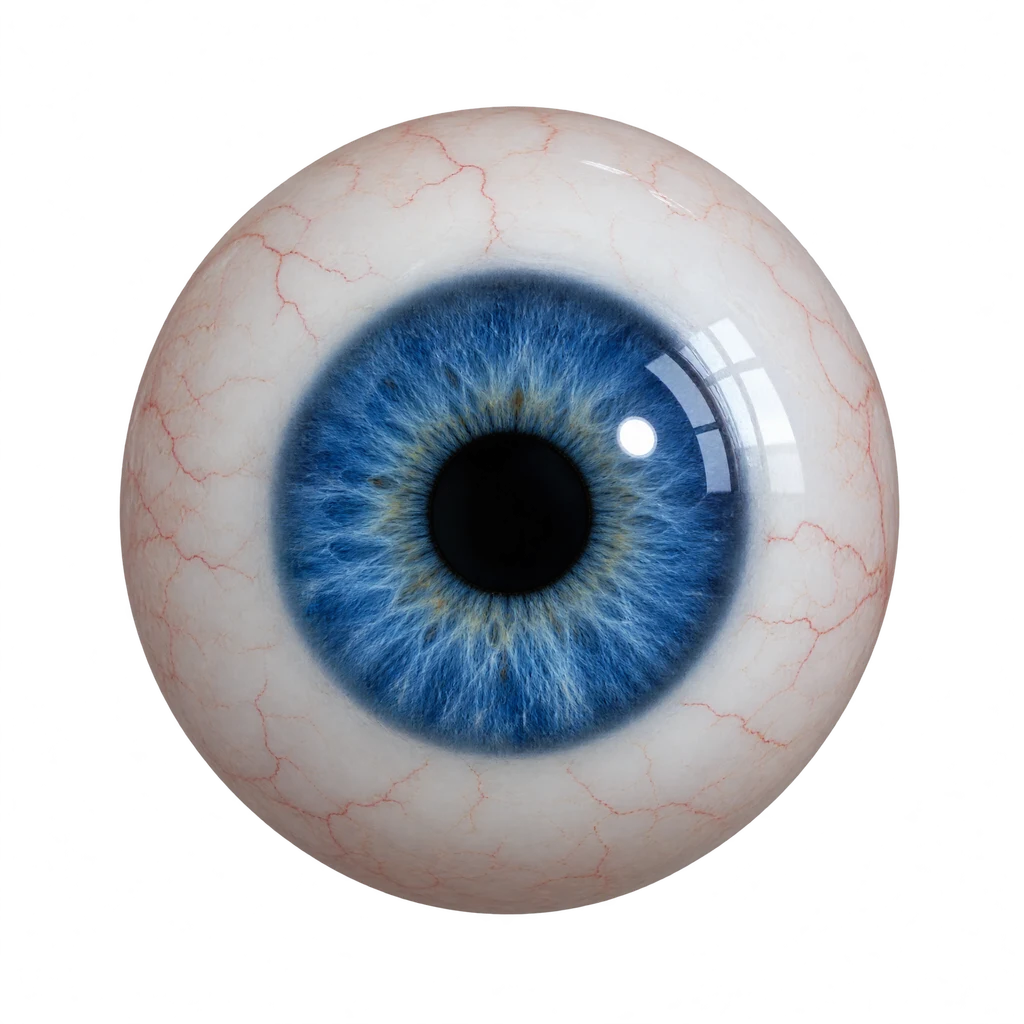
Laser eye colour change (laser iris depigmentation) uses a Q-switched Nd:YAG laser to remove melanin from the front layer of the iris, which can expose the lighter fibres underneath; these often look blue or green. It needs several sessions spread over months. A 2022 review notes that it has been used for cosmetic purposes "without receiving official approval or licensing," and that published data on it are very limited.
The largest published series, 1,176 eyes treated at the author's own clinic, reported high satisfaction but also brief iritis (inflammation inside the eye) in 25% of eyes. Independent reports describe what can go wrong:
- Pressure spikes. Pigment released by the laser can partly block the eye's drainage channels. A 2026 report from Israel described two patients treated abroad who arrived with eye pressures of 34 and 60 mmHg, needing hospital admission; one also developed herpes keratitis with corneal scarring and lost vision.
- Other damage. Case reports describe a hole in the iris (2021) and laser damage to the macula, the centre of the retina (2023). A 2025 review mentions isolated reports of iris thinning, long-term light sensitivity and pigmentary glaucoma.
- Unpredictable results. Colour can come out patchy, and you cannot choose the final shade.
Because published long-term data are so limited, the safety of laser colour change over decades is simply unknown.
Is eye colour change surgery permanent, and can it be reversed?
All three methods are sold as permanent, and getting out of them is not simple. A cosmetic iris implant can be taken out, but the published series show many patients still needed glaucoma surgery, cataract surgery or a corneal transplant afterwards. Keratopigmentation pigment sits deep in the cornea; removing it means further laser surgery on the cornea, and results are reported only in individual cases. Laser depigmentation removes your own iris pigment, and none of the reviews we checked describes a way to restore it. Before any of these, assume you are making a lasting change to a healthy eye.
Why Laser Istanbul Clinic doesn't offer eye colour change surgery
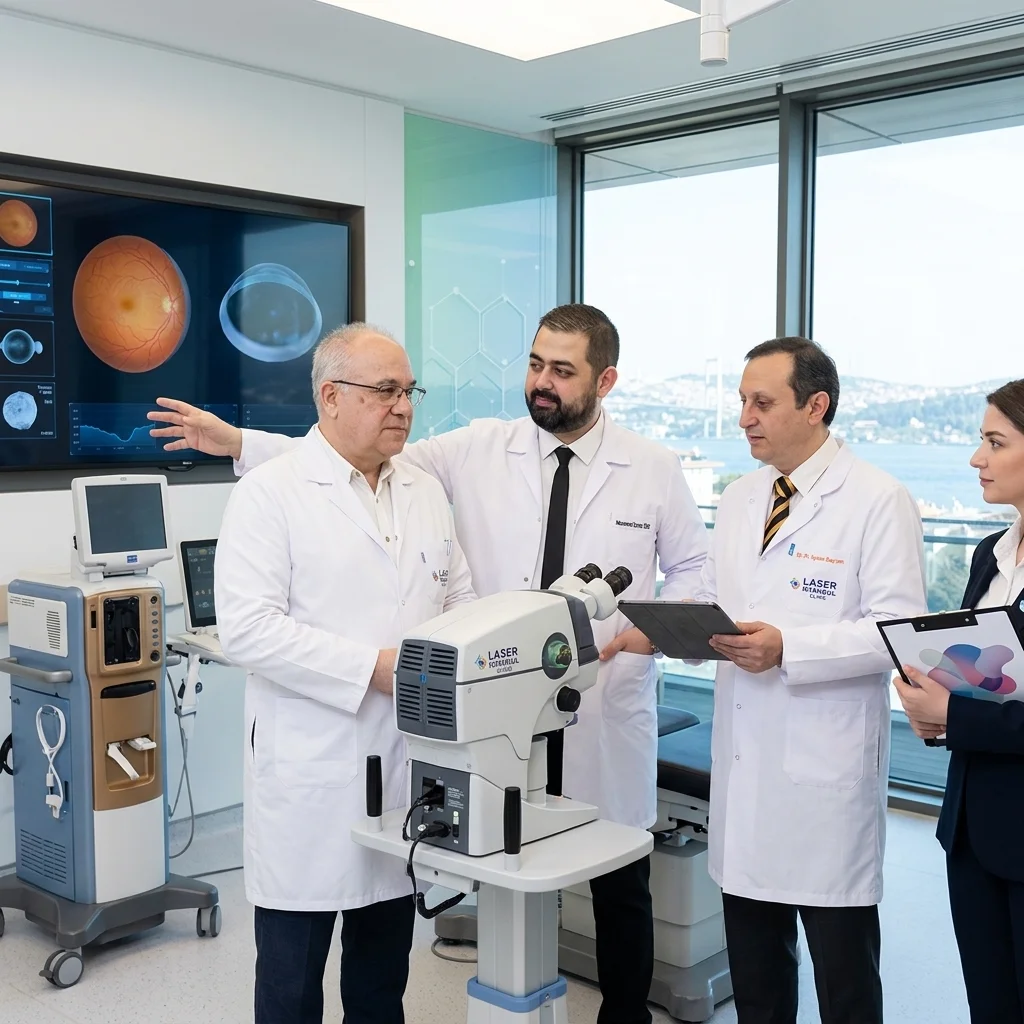
We don't offer eye colour change surgery because the trade is lopsided: a healthy eye with normal sight is exposed to risks that can include glaucoma, a corneal transplant or permanent loss of vision, for a change in appearance that a coloured contact lens can give with far less risk. As the AAO put it, "With purely cosmetic surgeries on the eye, it's just not worth the risk when it comes to your good vision."
Our surgeons spend their working lives treating the problems these procedures can cause: corneal disease, glaucoma, cataract and inflammation inside the eye. That is exactly why they won't create them.
- Prof. Dr. Ahmet Satıcı operates on cataract and glaucoma and performs laser vision correction, lens surgery and eyelid surgery.
- Doç. Dr. Muhammet Derda Özer ("Doç." means Associate Professor) is a cornea and retina specialist who treats keratoconus with cross-linking, performs corneal transplants and manages uveitis.
- Op. Dr. Aysan Bayram performs cataract and laser surgery and treats retinal disease.
If you'd like to change something about your eyes, there are procedures with a real benefit and decades of evidence behind them: getting rid of glasses with laser or a lens, or freshening tired-looking eyelids.
Is eye color change surgery in Turkey safe?
Eye color change surgery in Turkey carries the same risks as anywhere else, because the danger lies in the procedure, not the country. Several providers in Istanbul advertise iris implants, keratopigmentation or laser colour change to international patients. A skilled surgeon or a modern laser does not remove the complications described above; the published cases include people treated in many different countries.
Travelling adds problems of its own. Complications such as raised eye pressure or corneal swelling may appear months or years later, when you are back home and far from the person who operated. The 2026 laser report above involved patients treated abroad who arrived at a hospital at home with dangerously high eye pressure.
What about the price? People often search for the price or cost of laser eye color change in Turkey. We don't quote a price because we don't perform it. Whatever a quote says, it rarely includes the cost of treating a complication, which can mean glaucoma surgery, cataract surgery or a corneal transplant, sometimes in both eyes.
If you are still considering it anywhere, at the very least ask:
- Which method is it, and which exact implant or pigment will be used?
- What is the surgeon's own complication rate, and how many patients have needed further surgery?
- What tests of the cornea, eye pressure and drainage angle will be done first?
- Who will check your eye pressure and cornea regularly, for years afterwards?
- What happens, and who pays, if the implant has to come out or you need a corneal transplant?
What is the safest way to change your eye colour?
The safest way to change your eye colour is coloured contact lenses fitted by an eye-care professional. The AAO says the safest route is to "find out if you are a suitable candidate for colored contact lenses," dispensed by a qualified eye professional. Unlike surgery, you can take them out.
Coloured lenses still need care. The US Food and Drug Administration (FDA) states that "all contact lenses must be prescribed by a doctor, including decorative lenses," and lists the risks of badly fitted or illegally sold lenses as a scratch on the cornea, allergic reactions, reduced vision, infection and blindness. To stay safe:
- Have an eye examination and a proper fitting with an optometrist or ophthalmologist, even if you don't need vision correction.
- Buy only from a legitimate optician or supplier with your prescription, not from a market stall, beauty shop, novelty shop or unverified website.
- Never share lenses, and follow the cleaning and wearing schedule exactly.
- Take them out and get seen promptly if your eye becomes red or painful or your vision drops, which can be signs of infection.
Already had eye colour change surgery? What to watch for
If you already have an iris implant, keratopigmentation or laser colour change, the most important thing is regular eye examinations, even if your eyes feel fine. In the published series, complications often built up gradually: cell loss on the inner cornea and rising eye pressure can develop over years, and one patient's problems began 15 years after the implant.
Get your eyes checked promptly if you notice:
- blurred, cloudy or reduced vision
- eye pain or redness, especially with nausea
- new sensitivity to light or glare
- a hazy or cloudy look to the clear front of the eye
- an implant that looks off-centre or has shifted
At a check-up, an eye specialist will usually measure your eye pressure, look at the drainage angle, count the cells on the inner surface of the cornea, measure corneal thickness and examine the lens and retina. With those results, the specialist can tell you whether the implant or pigment can stay and be watched, or whether treatment is needed.
We can examine your eyes. If you've had a colour change procedure elsewhere and are worried, our surgeons can review your records and examine you in Istanbul, with a personal interpreter at every appointment. Doç. Dr. Özer assesses the cornea and inflammation, Prof. Dr. Satıcı the eye pressure and lens, and Op. Dr. Bayram the lens and retina. Any treatment you need would take place in a fully equipped, Ministry of Health–licensed operating theatre in Istanbul.

Is there a medical reason to have an artificial iris?
Yes. People who are born without an iris (aniridia) or who lose part of it through injury or surgery can suffer severe glare and light sensitivity. For them, a medical artificial iris is a recognised treatment: in a US clinical trial published in 2022, a custom artificial iris reduced marked-to-severe daytime light sensitivity by 59.7% at 12 months, and 93.8% of patients reported a better appearance. This is a different device, for a different reason, from the cosmetic implants described above. If you have an iris defect, ask us about it as a medical question, not a cosmetic one.
Frequently asked questions
No form of eye color change surgery is risk-free. The American Academy of Ophthalmology warned against iris implants and keratopigmentation in January 2024, saying they can cause glaucoma, cataract, corneal damage and vision loss. Laser colour change has very limited long-term data. Coloured contact lenses fitted by a professional are the safer alternative.
Keratopigmentation is corneal tattooing: mineral pigment is placed in a ring-shaped tunnel inside the cornea, usually made with a femtosecond laser, so the eye looks a different colour. It was developed to disguise scarred eyes and is now also used cosmetically. Reported risks include light sensitivity, infection, colour fading and corneal thinning (ectasia), and long-term data for cosmetic use are still lacking.
No. Laser Istanbul Clinic does not offer iris implants, keratopigmentation or laser colour change, in Istanbul or anywhere else. Our surgeons can examine eyes that have already had one of these procedures, and they offer evidence-based treatments such as laser eye surgery, lens replacement and cataract surgery.
We don't quote a price for laser eye color change in Turkey, because we don't perform it. If you compare offers elsewhere, remember that the price rarely covers treating a complication, which can mean glaucoma surgery, cataract surgery or a corneal transplant.
It is designed to be permanent, and undoing it is difficult. Iris implants can be removed, but many patients still need glaucoma surgery, cataract surgery or a corneal transplant afterwards. Removing keratopigmentation means further corneal laser surgery, and the published reviews describe no way to restore iris pigment removed by a laser.
A laser can remove pigment from the front of a brown iris, and the fibres underneath often look blue or green. The shade can't be chosen and may be patchy. Released pigment can raise the pressure inside the eye, and serious cases with very high eye pressure have been reported.
Coloured contact lenses, prescribed and fitted after an eye examination by an optometrist or ophthalmologist. They can be removed, unlike surgery. Buy them only with a prescription from a legitimate supplier, never share them, and remove them and get help if your eye becomes red or painful.
Yes. Complications such as raised eye pressure and loss of corneal cells can develop slowly and without symptoms at first; one published case began 15 years after the implant. Have regular check-ups with an eye specialist, as often as they advise, and go sooner if your vision blurs or your eye becomes painful or red.
Sources for the facts on this page
- American Academy of Ophthalmology, news release "Academy Issues Warning on the Dangers of Eye Color-Changing Procedures", 29 Jan 2024: risks of cosmetic iris implants and keratopigmentation; iris implants approved only for missing iris; "it's just not worth the risk"; coloured contact lenses as the safest option. https://www.aao.org/newsroom/news-releases/detail/academy-issues-warning-on-eye-color-procedures
- MedlinePlus Genetics (US National Library of Medicine), "Is eye color determined by genetics?": eye colour related to melanin in the front layers of the iris; brown most common worldwide. https://medlineplus.gov/genetics/understanding/traits/eyecolor/
- US Food and Drug Administration, "Decorative Contact Lenses for Halloween and More" (content current as of 22 Oct 2024): all contact lenses, including decorative, must be prescribed; risks; where not to buy. https://www.fda.gov/medical-devices/contact-lenses/decorative-contact-lenses-halloween-and-more
- El Chehab H, et al. Complications of cosmetic iris implants: French series of 87 eyes. J Cataract Refract Surg 2020;46(1):34–39 (65 eyes analysed: 92.3% ≥1 complication, corneal decompensation 78.5%, glaucoma 52.3%, explantation 81.5%). PMID 32050230. https://pubmed.ncbi.nlm.nih.gov/32050230/
- Ghaffari R, Aldave AJ, Al-Hashimi S, Miller KM. Complications of cosmetic artificial iris implantation and post explantation outcomes. Am J Ophthalmol 2021;226:156–164 (24 eyes, NewColorIris and BrightOcular devices; removal 79.2%, corneal transplant 29.2%, cataract extraction 29.2%, persistent glaucoma 29.2%). PMID 33493470. https://pubmed.ncbi.nlm.nih.gov/33493470/
- Balal S, et al. (Moorfields Eye Hospital). Complications and management of cosmetic iris implants. Am J Ophthalmol 2025;277:433–440 (30 eyes; uveitis 60%, glaucoma surgery 33.3%, DMEK 20%, phaco 13.3%; recommend a worldwide ban). PMID 40480347. https://pubmed.ncbi.nlm.nih.gov/40480347/
- Queiruga-Piñeiro J, et al. Long-term complications of cosmetic iris implants. BMC Ophthalmol 2022;22:459 (complications 15 years after implantation). PMID 36451122. https://pubmed.ncbi.nlm.nih.gov/36451122/
- D'Oria F, Abu-Mustafa SK, Alió JL. Cosmetic change of the apparent color of the eye: a review on surgical alternatives, outcomes and complications. Ophthalmol Ther 2022;11(2):465–477 (iris implants neither CE-marked nor FDA-approved; laser depigmentation used without official approval, very limited data). PMID 35061240. https://pmc.ncbi.nlm.nih.gov/articles/PMC8927577/
- D'Oria F, Alió JL. Surgical techniques for cosmetic eye color change: a narrative review. Ophthalmol Ther 2025;14(8):1685–1694 (how each method works; laser depigmentation exposes stromal fibres that often appear blue or green; IOP rise from partial obstruction of drainage; isolated reports of stromal atrophy, chronic photophobia and pigmentary glaucoma; KTP evidence "largely based on limited single-center data"). PMID 40483374. https://pmc.ncbi.nlm.nih.gov/articles/PMC12271006/
- Alió JL, Al-Shymali O, Amesty MA, Rodriguez AE. Keratopigmentation with micronised mineral pigments: complications and outcomes in a series of 234 eyes. Br J Ophthalmol 2018;102(6):742–747 (12.82% complications; light sensitivity 49%, fading/colour change 19%, visual field 4%, MRI 2%; light sensitivity gone in 81.81% by 6 months). PMID 28855194. https://pubmed.ncbi.nlm.nih.gov/28855194/
- D'Oria F, Alió JL, et al. Cosmetic keratopigmentation in sighted eyes: medium- and long-term clinical evaluation. Cornea 2021;40(3):327–333 (79 eyes; 35.4% reoperated; light sensitivity at first month 30%). PMID 32740012. https://pubmed.ncbi.nlm.nih.gov/32740012/
- Alió J, et al. Femtosecond laser-assisted keratopigmentation outcomes for pure cosmetic purposes. Am J Ophthalmol Case Rep 2025;38:102297 (166 eyes; contrast sensitivity and endothelial cell count decreased). PMID 40151591. https://pubmed.ncbi.nlm.nih.gov/40151591/
- Nouzovská K, Noveyri BB, Abu-Mustafa S, Alió JL. Corneal ectasia following cosmetic keratopigmentation. Cornea 2025;44(6):779–787 (10 eyes, 6 months to 4 years; 3 treated with cross-linking). PMID 39509277. https://pubmed.ncbi.nlm.nih.gov/39509277/
- Uddin O, et al. (Wilmer Eye Institute). Severe corneal ulceration after cosmetic keratopigmentation. Cornea 2025;44(10):1319–1321. PMID 40397700. https://pubmed.ncbi.nlm.nih.gov/40397700/
- Castanera-Gratacós D, et al. Removal of a cosmetic femtosecond laser-assisted keratopigmentation. J Refract Surg 2025;41(12):e1360–e1363 (removal by femtosecond flap and excimer ablation after loss of vision quality). PMID 41369670. https://pubmed.ncbi.nlm.nih.gov/41369670/
- Alió JL. Cosmetic keratopigmentation works and can be used as a new aesthetic solution to change the apparent color of the eye. Cornea 2026;45(7):809–810 ("lack of long-term evidence, particularly for cosmetic indications"; concerns over pigment safety, stability and durability). PMID 42242237. https://pubmed.ncbi.nlm.nih.gov/42242237/
- Grimaldos Ruiz P. Photoablative cosmetic iridoplasty: effective, safe, and predictable eye color change in 1176 eyes. Int Ophthalmol 2021;41(4):1381–1393 (iritis in 25%; sessions in 2–3 phases). PMID 33484383. https://pubmed.ncbi.nlm.nih.gov/33484383/
- Jaber W, Nemet M, Waisbourd M. Laser iris depigmentation resulting in markedly elevated intraocular pressure and herpes simplex keratitis with corneal scarring. Case Rep Ophthalmol 2026;17(1):312–317 (two patients treated abroad; IOP 34 and 60 mmHg). PMID 41982480. https://pubmed.ncbi.nlm.nih.gov/41982480/
- Ferrari F. Case report of an iris perforation after YAG laser iris depigmentation for aesthetic reasons. J Fr Ophtalmol 2021;44(5):e283–e285. PMID 33549351. https://pubmed.ncbi.nlm.nih.gov/33549351/
- Flores-Márquez A, et al. Laser-induced maculopathy after iris depigmentation cosmetic treatment. Can J Ophthalmol 2023;58(1):e29–e31. PMID 35809624. https://pubmed.ncbi.nlm.nih.gov/35809624/
- Ayres BD, et al. Results of the United States FDA clinical trial of the CustomFlex Artificial Iris. Ophthalmology 2022;129(6):614–625 (medical artificial iris for congenital or acquired iris defects; 59.7% reduction in marked-to-severe daytime light sensitivity; 93.8% improved cosmesis). PMID 35131359. https://pubmed.ncbi.nlm.nih.gov/35131359/
Worried about an eye colour procedure, or want a safer change?
Send us your eye records or your questions. Prof. Dr. Satıcı, Doç. Dr. Özer or Op. Dr. Bayram will tell you honestly what your eyes need, whether that's a check-up after a colour change procedure, freedom from glasses, or nothing at all. No obligation, and you'll get a reply within {{response time}}.
3 eye surgeons
Your case is reviewed by a named surgeon, not a salesperson. Reply within {{response time}}.
 Prof. Dr. Ahmet Satıcı
 Doç. Dr. Muhammet Derda Özer
 Op. Dr. Aysan Bayram